
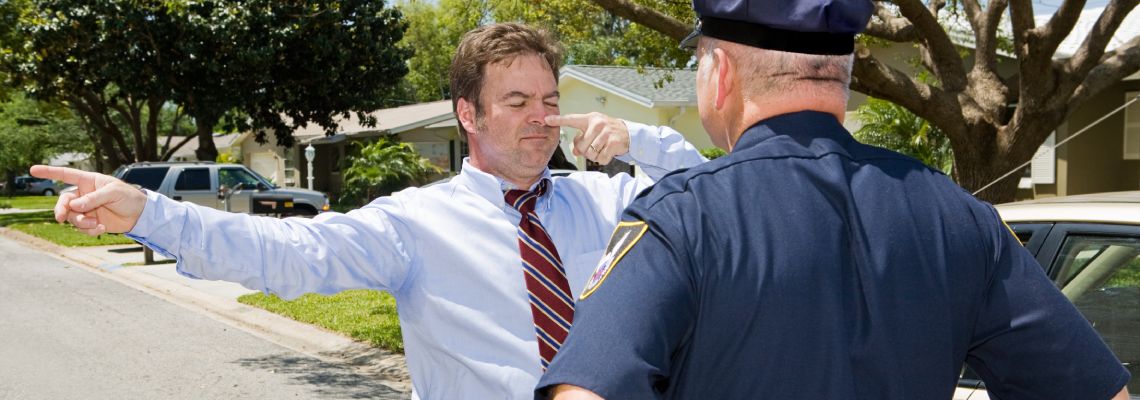
How Field Sobriety Tests Can Be Challenged in DWI Cases
Getting pulled over on a dark road is a terrifying experience that leaves most people shaking with adrenaline and fear. When an officer asks you to step out of the vehicle and perform physical tests, the pressure to "pass" feels immense, even if you haven't had a single drink. It’s a moment where you feel judged before you’ve had a chance to speak.
The anxiety of potentially losing your license or your reputation can make even the simplest tasks feel impossible. I know that behind every police report is a real person who’s scared about their future and feeling the weight of a system that often feels stacked against them.
At Vernetti Law, I’m here to remind you that a failed test on the side of the road isn't a conviction. I take the time to listen to your side of the story and look for the flaws in the prosecution's evidence that others might overlook. I’m proud to support neighbors in Bentonville, Arkansas, and throughout Benton County and Washington County who need a strong advocate in their corner. If you’re facing a DWI and feel like the evidence is stacked against you, reach out to me today to start building your defense.
The Subjective Nature of Roadside Testing
Standardized Field Sobriety Tests (SFSTs) are often presented by the prosecution as scientific measurements of impairment in a DWI charge, but in reality, they're highly subjective observations made by human beings. An officer’s judgment is the only thing that determines whether you "passed" or "failed," and that judgment can be clouded by bias or a lack of proper training.
I’ve seen countless cases where a person’s natural lack of coordination or nervousness was recorded as a sign of intoxication. I dig into the training files of the arresting officer to see if they truly followed the strict guidelines set by the National Highway Traffic Safety Administration (NHTSA).
If the officer deviated from these protocols, the results shouldn't be used as evidence against you. My goal is to show the court that "failure" on these tests is rarely a clear-cut indicator of guilt.
Officer bias: Sometimes an officer decides you’re guilty the moment they smell your breath, leading them to score your physical movements more harshly than they should.
Lack of baseline: Since the officer has never seen you move while sober, they have no way of knowing if your "stumble" is just how you naturally walk or balance.
Vague grading criteria: The instructions for these tests are often confusing, and small mistakes that don't relate to alcohol are often used to justify an arrest.
When I challenge the officer's interpretation, I'm forcing the court to look at the facts rather than just taking a police report at face value. A failed test is an opinion, not an objective truth. By questioning the person behind the badge, I help protect you from being unfairly labeled.
Environmental Factors That Influence Performance
The side of a highway is quite possibly the worst place to conduct a physical balance test. Between the glaring lights of passing cars, the uneven gravel, and the howling wind, even a professional athlete would struggle to maintain perfect form.
When you’re facing a DWI charge, the prosecution rarely mentions the wind speed or the slope of the pavement where you were standing. I use video evidence and weather reports to recreate the scene and show how external factors made it impossible for you to succeed.
If the conditions weren't ideal, the test results are essentially meaningless. I believe that if the state wants to use these tests against you, they should have been conducted in a fair and controlled environment.
Uneven terrain: Gravel shoulders, sloped roads, or cracked pavement can cause anyone to lose their footing or step off a line.
Distracting lights: The flashing blue and red lights of a patrol car can cause "optokinetic nystagmus," which is a fancy way of saying your eyes might twitch because of the lights, not because of alcohol.
Weather conditions: Rain, snow, or high winds make balance nearly impossible and can also make you shiver, which an officer might mistake for "jitters" from intoxication.
Passing traffic: The gust of wind from a semi-truck driving by at 70 mph is enough to push anyone off balance during a walk-and-turn test.
By bringing these environmental realities to light, I provide a logical explanation for why the tests didn't go as planned. It’s not about making excuses; it’s about presenting the whole truth of what happened that night. This perspective is vital for any DWI lawyer fighting to get your charges reduced or dismissed.
Rebuilding Your Life After a DWI
You’ve been through a lot, and it’s okay to feel worn out by this process. Please remember that one night on the side of a road does not define the rest of your life. There are ways to fight back, and there are people who want to see you succeed and put this behind you. I’m here to offer you the support and the defense you need to look toward the future again.
I’m ready to stand with you and challenge the evidence every step of the way. At Vernetti Law, I treat every client with the dignity and respect they deserve while fighting for their rights in Bentonville, Arkansas, and throughout Benton County and Washington County. Reach out to me at Vernetti Law today so we can start working on your DWI defense together.